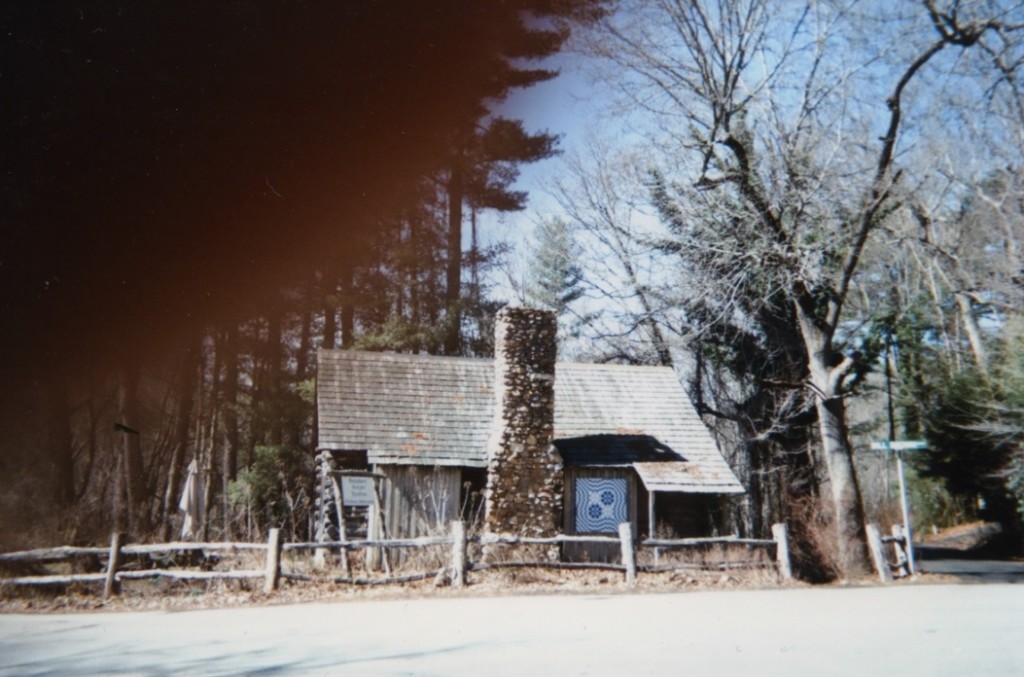
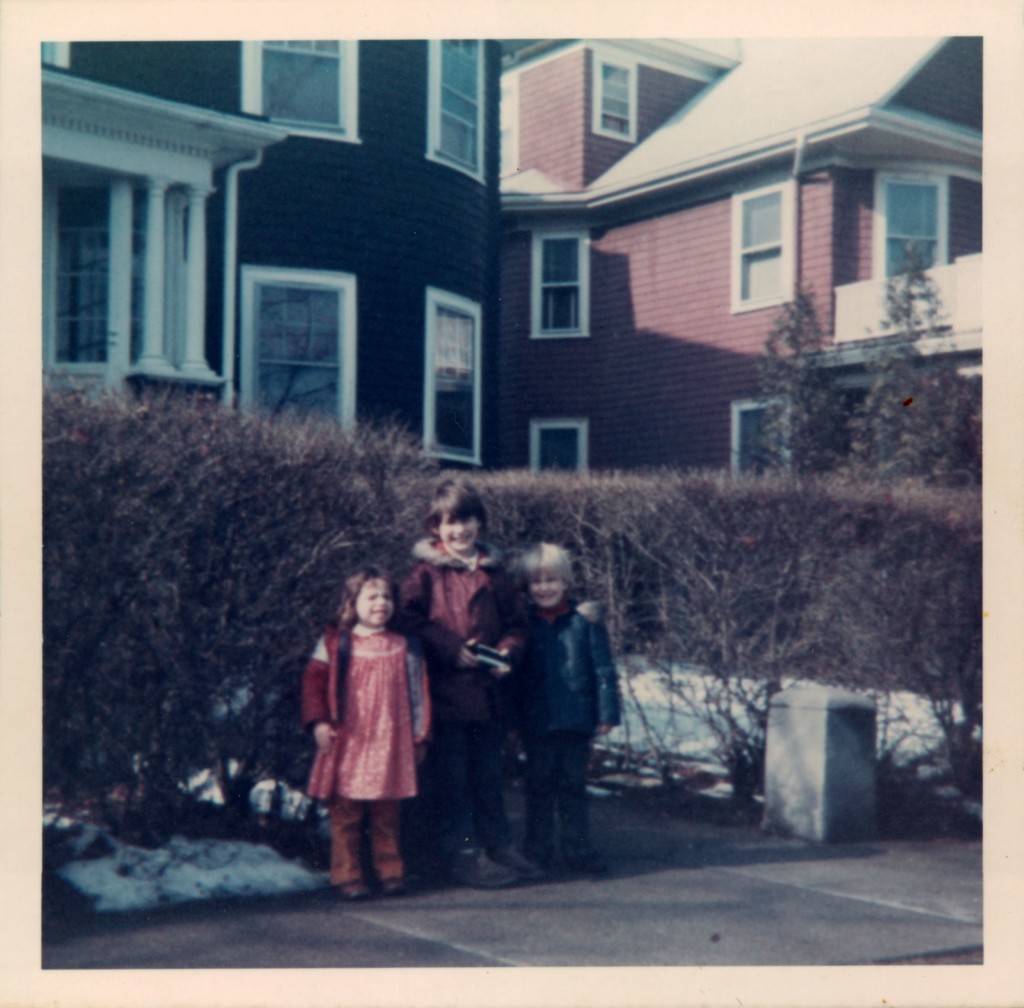
family photos
Today I’m placing our Yesterday around 1976, an important year for color chemical photography. I chose the year for the controversial William Eggleston exhibition at MOMA – which almost instantly moved color photographs from the ghetto of the commonplace into the, well, ghetto of the artworld – but really we’re talking about family albums, one-hour photo places, and drugstore prints. My odd sleeping pattern worked weirdly in my favor last night, as I had been searching for a few quotes from Sontag’s On Photography that I knew would be useful, and just ended up staying awake until 2:30 re-reading the whole book. I’ve always said that this book has been one of the fundamentally most important texts to the way I’ve understood Photography. I was amazed to find how true this still is, and just how much she manages to pack into only 200 pages.
There are so many passages relevant to me, and to this course, but I chose this as one of the things to read to the class:
“Through photographs, each family constructs a portrait-chronicle of itself — a portable kit of images that bears witness to its connectedness. It hardly matters what activities are photographed so long as photographs get taken and are cherished. Photography becomes a rite of family life just when, in the industrializing countries of Europe and America, the very institution of the family starts undergoing radical surgery. As that claustrophobic unit, the nuclear family, was being carved out of a much larger family aggregate, photography came along to memorialize, to restate symbolically, the imperiled continuity and vanishing extendedness of family life. Those ghostly traces, photographs, supply the token presence of the dispersed relatives. A family’s photograph album is generally about the extended family — and, often, is all that remains of it.”
-Susan Sontag, On Photography
I’ve been using the material history of Photography to talk about the technical syntax of each process, i.e. how it says what it says. When I think of the color print, the most obvious way it has existed in the world is as the classic 4×6 glossy print. You’d shoot a roll, bring it to the drugstore, and pick it up a little bit later. Almost every household, even today, has some of these (if not tons) kept in albums and shoeboxes, living rooms and attics. Since the second half of the Twentieth Century, it’s how we told the story of us. (If you want to get lost in this history, take a look at the Internet K-Hole blog. Don’t say I didn’t warn you.) So, for class today, I gave everyone two disposable cameras.
We talked a lot about Sontag, regarding the special power that these small prints can hold:
“…we have in a photograph surrogate possession of a cherished person or thing, a possession which gives photographs some of the character of unique objects.”
“Few people in this society share the primitive dread of cameras that comes from thinking of the photograph as a material part of themselves. But some trace of the magic remains: for example, in our reluctance to tear up or throw away the photograph of a loved one, especially of someone dead or far away.”
– On Photography
From there it was a quick step to Roland Barthes’ Camera Lucida, the other pillar in the contemporary theory of Photography. If Sontag is the stern and brilliant mother of my thought, Barthes is the kind and critical father:
“What did I care about the rules of composition of the photographic landscape, or, at the other end, about the Photograph as family rite? Each time I would read something about Photography, I would think of some photograph I loved, and this made me furious. Myself, I saw only the referent, the desired object, the beloved body…”
– Roland Barthes, Camera Lucida
It was an incredibly beautiful day out, sunny and 60’s. I handed them their cameras and sent them out into the sunshine…
As for me, I actually got out of the studio for a while. One of the odd local dogs that hang out at Penland picked me up at the School Store and walked me around the loop, through the woods. After lunch, I took a hike on Paulus’ Path up to the top of the knob, a mile and a half each way. The rest of the afternoon, however, was spent sitting at the computer, finding and organizing 99 images from various artists to show to the class tomorrow. Glad to have spent as much time as I did outdoors today.
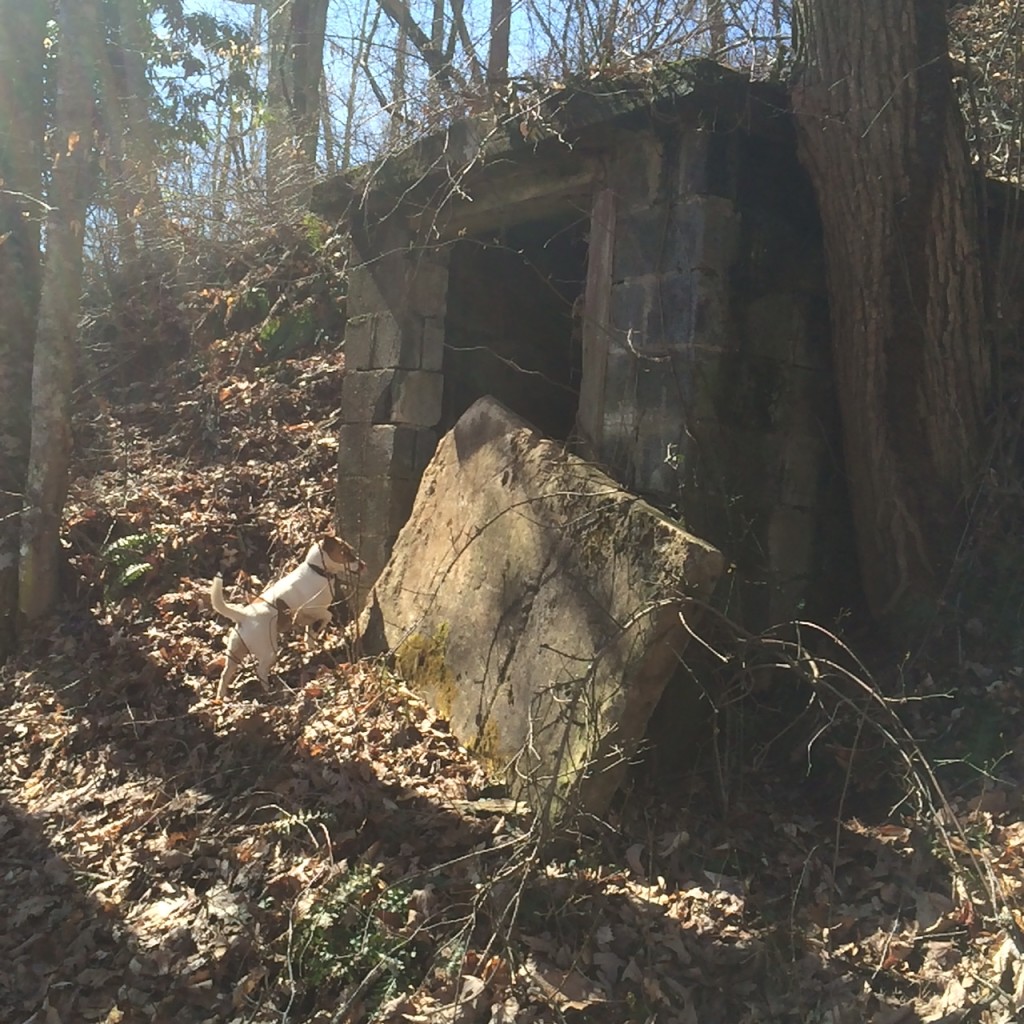
Fred takes me on a walk.